Introduction
Commercial roofing involves the construction, installation, and maintenance of low-slope or flat roofing systems on commercial buildings. This guide is designed for building owners, facility managers, and property managers seeking to understand their options for commercial roofing systems, materials, and services. Making informed decisions about your roof can protect your investment, reduce long-term costs, and ensure compliance with local codes.
In 2026, commercial roofing centers on flat and low-slope systems using TPO, PVC, modified bitumen, and restoration coatings—each suited to different building types and budgets. Houston’s intense sun, heavy rain, and hurricane exposure make proper drainage design, UV-stable membranes, and wind uplift ratings critical for any flat roof. TPO has become the go-to roofing solution for many Houston flat roofs due to its reflectivity, durability, and cost effectiveness—call TPO Roofing In Houston for inspections, repairs, and new installations. Success with commercial roofing depends on quality building materials, proper installation, and ongoing maintenance from a specialist contractor. This article covers system options, critical components, maintenance strategies, and how to choose the right commercial roofing partnership.
Why Understanding Commercial Roofing Matters
For building owners, facility managers, and property managers, understanding commercial roofing is essential for protecting your property investment, minimizing operational costs, and ensuring your building meets all local code requirements. The right roofing decisions can prevent costly leaks, extend the lifespan of your facility, and improve energy efficiency.
Key Factors for Selecting a Commercial Roofing System
Key factors for selecting a commercial roofing system include climate suitability, durability, energy efficiency, budget, and maintenance requirements. Selecting a commercial roofing system requires balancing immediate costs with long-term operational needs and environmental exposure.
Overview of Common Commercial Roofing Materials
Common commercial roofing materials include TPO, PVC, EPDM, metal, and modified bitumen. Single-ply roofing systems typically use TPO, PVC, or EPDM membranes. Modified bitumen and built-up roofing (BUR) are asphalt-based systems known for durability. Metal roofing is another durable option for commercial buildings.
- TPO is a lightweight, white, energy-efficient single-ply membrane ideal for warmer climates.
- PVC roofing membranes are suitable for all types of single-ply systems and come with guarantees up to 30 years.
- EPDM, or rubber roofing, is a synthetic material known for its durability and UV resistance, commonly used on low-slope roofs.
- Modified Bitumen is an asphalt-based roofing system known for superior strength and durability.
- Built-Up Roofing (BUR) is a layered roof system known for excellent waterproofing and protection against heavy foot traffic.
- Metal roofing can last over 50 years with proper maintenance and is highly fire-resistant.
We Build Commercial Roofing Systems for Today’s Flat Roof Challenges
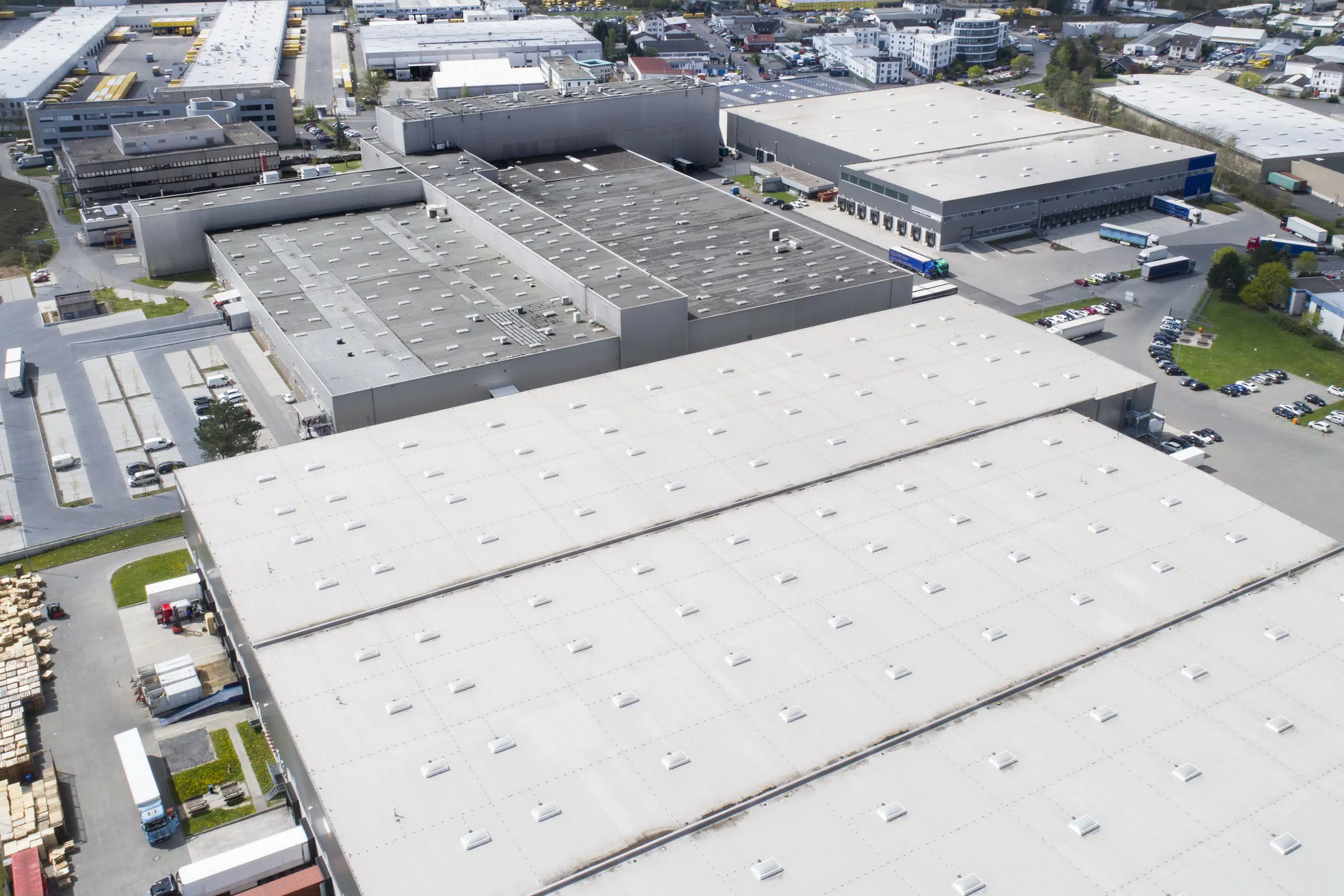
Commercial roofing in 2026 primarily means flat or low-slope roof systems on offices, warehouses, retail centers, schools, and industrial facilities. These structures demand roofing that can handle ponding water, high winds, intense UV exposure, energy efficiency mandates, and integrated rooftop equipment like HVAC units and solar arrays.
Choosing the right contractor matters as much as selecting the right membrane. A specialist in flat commercial roofs brings expertise that residential-only contractors simply cannot match. This commitment to workmanship extends the life of your investment and protects your business from costly leaks.
Houston building owners: Call TPO Roofing In Houston for flat roof inspections, leak diagnostics, and TPO replacement across Greater Houston—from Downtown to the Energy Corridor, Greenspoint, and the Port of Houston area.

TPO Roofing Membranes for Flat and Low-Slope Roofs
TPO (thermoplastic polyolefin) is a white, reflective single-ply membrane that has dominated the commercial market since the early 2000s. Today, it covers shopping centers, distribution warehouses, and office parks built or re-roofed between 2010–2026, and many owners now look for a full guide to TPO flat roofs when evaluating replacement options.
Key Benefits of TPO Roofing
- Solar reflectivity indices exceeding 80-90%, delivering up to 20% energy savings
- Heat-welded seams creating seamless, watertight barriers
- Competitive installed cost at $4-8 per square foot
- Lightweight at approximately 1.2 lbs per square foot
- Compatible with polyisocyanurate insulation and cover boards
Warranties typically range from 15-30 years depending on membrane thickness (60 mils or higher recommended) and proper detailing around drains, parapet walls, and penetrations.
Houston Facility Managers: TPO Roofing In Houston specializes in TPO tear-offs, retrofit overlays, and leak repairs on existing TPO systems. Contact our team for a comprehensive plan tailored to your building.
PVC Roofing Membranes for Demanding Commercial Environments
PVC (polyvinyl chloride) single-ply roofs have served restaurants, hospitals, and industrial facilities since the 1980s. This membrane excels where chemical and grease resistance is non-negotiable—think commercial kitchens, food processing plants, and manufacturing sites.
Like TPO, PVC uses heat-welded seams for monolithic, watertight joints. This allows for detailed flashing work around rooftop equipment. Warranties reach 25-30 years on thicker membranes (50-80 mils) when installed per manufacturer specifications.
TPO vs. PVC: Quick Comparison
Factor | TPO | PVC |
|---|---|---|
Chemical resistance | Good | Excellent |
Grease resistance | Moderate | Superior |
Cost | Lower | Higher |
Availability | Broad | Narrower |
Choose PVC when your building demands chemical protection. For owners weighing both options, our PVC vs. TPO roofing comparison highlights how performance, cost, and application differ. Opt for TPO when cost and broad availability drive your decision.
Asphaltic and Modified Bitumen Roofing Systems
Asphalt-based commercial roofs remain common on existing buildings constructed between the 1970s and early 2000s. These materials include:
APP Modified Bitumen
- APP (atactic polypropylene): A plastomeric modified bitumen, torch-applied, offering UV and weather resistance at $3-7 per square foot
SBS Modified Bitumen
- SBS (styrene-butadiene-styrene): A flexible, rubberized system suited to temperature swings, hail impact, and foot traffic
Built-Up Roofing (BUR)
- Built-up roofing (BUR): Multiple plies of asphalt-saturated felts with hot asphalt, often gravel-surfaced, found on older industrial and institutional buildings
When should you restore versus replace? If your existing roof deck is structurally sound and insulation remains dry, coatings or overlays can extend service life by a decade. If moisture surveys reveal saturated insulation or widespread damage, a full TPO or PVC replacement becomes the smarter investment; reviewing frequently asked questions about TPO roofing can also clarify which route best fits your building.
Roof Coatings and Restoration Systems
Roof coatings are fluid-applied systems—acrylic, silicone, polyurethane, or elastomeric hybrids—used to restore aging but structurally sound commercial roofs. They improve waterproofing and reflectivity with less disruption than full replacement.
Common Use Cases for Roof Coatings
- Restoring aging metal roofs on warehouses
- Renewing weathered asphaltic roofs
- Boosting reflectivity on darker membranes
Proper surface preparation, moisture surveys, and manufacturer-approved thicknesses determine warranty validity. Professional assessment is essential.
Example: A 40,000 sq. ft. light-industrial building in Houston applies silicone coating at $1-3 per square foot, delaying full replacement by 10+ years while gaining 15-30% energy savings and maintaining full coverage against ponding water.
Critical Commercial Roofing Components: Insulation, Cover Boards, and More
A successful commercial roof extends beyond the top membrane. The complete roofing system includes:
- Polyiso insulation boards: The industry standard, delivering R-6+ per inch to meet energy codes in Houston, Dallas, and Austin
- Cover boards: Gypsum, high-density polyiso, or cementitious boards that improve impact resistance, fire performance, and dimensional stability
- Fasteners and plates: Mechanical attachment achieving FM 1-90 wind ratings for Gulf Coast hurricane zones (6-12” spacing)
- Accessories: Pre-formed flashings, sealants, walkway pads, and perimeter edge metal (coping, fascia, gutters, downspouts)
These components work together to protect your building and maintain integrity through decades of service.

Commercial Roof Accessories: Flashings, Edges, Skylights, and Overburden
Approximately 70% of leaks occur at transitions and penetrations rather than in the open field of the membrane. Accessories and details are crucial.
Essential Roof Accessories
- Flashings: Properly designed installations at parapet walls, roof drains, HVAC curbs, pipe penetrations, and expansion joints
- Perimeter metal: Copings, fascia, drip edges, and scuppers protecting roof edges from wind uplift and water intrusion
- Skylights and domes: Daylighting options reducing lighting costs by 10-20% in warehouses and retail spaces
- Roof overburden: Paver systems, vegetative roofs, or rooftop amenity decks requiring specific design, protection, and structural engineering for added loads (20-100 psf)
Each element demands professional installation to maintain your roof’s durable, watertight performance.
Commercial Roofing Services: Repair, Replacement, and Maintenance
Commercial roofs are long-term assets requiring an ongoing service plan. Professional services include:
Leak Repair and Troubleshooting
- Tracing water entry paths
- Checking seams and penetrations
- Documenting conditions with photos and roof plans
Replacement or Retrofit Projects
- Condition assessment with core cuts and moisture surveys
- Code review and membrane selection
- Phased construction to minimize business disruption
Preventive Maintenance
- Semi-annual inspections (spring and fall)
- Post-storm checks—essential in the Houston metro
- Standardized systems and centralized records for portfolio owners
Regular maintenance protects your investment and supports manufacturer warranty requirements, and a focused program for TPO roof maintenance is especially important on large flat commercial facilities.
Navigating Commercial Roofing Decisions as a Building Owner or Manager
Surprise leaks, budget uncertainty, and confusing bids frustrate many building owners. Before calling contractors, gather:
Information to Gather Before Calling Contractors
- Roof age and known membrane type
- Recent leak history
- Planned rooftop equipment changes (new HVAC, solar)
What to Request in Proposals
- Membrane type and thickness
- Insulation R-values
- Fastening patterns and flashing details
- Warranty terms and exclusions
Gulf Coast guidance: Verify that proposed systems meet local wind uplift, fire, and energy code requirements for 2026. Confirm contractors understand Harris County permitting and demand training credentials for employees installing your roof.
Prioritize long-term value over the lowest price. Consider energy performance, maintenance access, and the contractor’s track record with flat roof systems, and partner with experienced TPO roofing installers in Houston who can design a system around your specific building needs.
Why Work With a Specialist for Houston Flat Roofs
Flat roofs in hot, humid, storm-exposed markets like Houston face unique challenges. A Houston-focused specialist understands local rainfall intensity, drainage design to avoid ponding, and how extreme UV and heat cycles affect different membranes, making them the right choice for top TPO roofing services in Houston on commercial and industrial buildings.
TPO Roofing In Houston concentrates on:
- Commercial flat and low-slope roofs
- Firestone UltraPly™ TPO roofing systems on warehouses, retail centers, office buildings, and light industrial properties
- Emergency leak response during heavy storms
- Full TPO re-roofs on aging built-up roofs
- Energy-efficient upgrades for older dark-surfaced roofs
Our mission is delivering the highest quality roofing solutions with a network of support across the community.
Ready to explore your options? Call TPO Roofing In Houston today to schedule a flat roof inspection, discuss TPO options, and receive a detailed, line-item proposal. Your building deserves an industry leader committed to your success.
Frequently Asked Questions
How long does a commercial flat roof typically last?
Lifespans vary by system and maintenance. TPO and PVC roofs typically last 20-30 years. Well-installed modified bitumen reaches 20+ years, and maintained BUR systems can exceed 30 years. Houston’s storms and UV exposure shorten service life if maintenance is neglected. Professional coatings can add 5-10 years to an aging roof.
How do I know if my commercial roof needs replacement or can be restored?
Key replacement indicators include widespread saturated insulation (over 15% moisture), repeated leaks in multiple areas, severe membrane cracking, and major code issues. Restoration works only when the deck and insulation remain dry and structurally sound. Request core cuts and moisture scans from a qualified contractor like TPO Roofing In Houston before you decide.
What is the best commercial roofing system for Houston’s climate?
White, reflective single-ply systems like TPO are widely chosen for Houston because they reduce cooling loads and withstand intense sun. PVC suits locations with heavy chemical or grease exposure. Coatings extend life on sound metal or asphaltic roofs. Consult TPO Roofing In Houston to match materials to your specific building.
How often should a commercial flat roof be inspected?
Schedule at least two professional inspections per year—typically spring and fall—plus checks after severe wind or hail events. Inspections should cover drains, scuppers, seams, flashings, and rooftop units with photos and written reports. Most manufacturer warranties require reasonable maintenance documentation.
Can I install solar panels on my existing commercial flat roof?
Yes, in many cases, but first evaluate your roof’s age, condition, and structural capacity. Coordinate between your roofer and solar contractor so panel supports and conduit penetrations integrate properly into flashing details. Consider timing solar projects with a re-roof or TPO upgrade so warranties align with your solar investment.