Key Takeaways
- A commercial roof contractor specializes in installing, repairing, and maintaining roofing systems on offices, warehouses, retail centers, schools, and industrial buildings, handling far more complex projects than residential roofers.
- Choosing a certified and properly insured commercial roofing contractor is critical for long-term roof performance, code compliance, and warranty eligibility on systems like TPO, EPDM, PVC, metal, and coatings.
- The main commercial roofing systems include single-ply membranes, metal roofing, spray foam, built-up roofing, and modified bitumen, each recommended based on building type, climate, and budget.
- Evaluating contractors requires checking certifications, references, safety record, and requesting detailed written proposals before signing any contract.
- A quality commercial roof contractor should provide ongoing services including inspections, maintenance plans, leak repairs, and emergency response to protect your investment.
What Is a Commercial Roof Contractor?
A commercial roof contractor is a specialist focused on installing, repairing, and maintaining roofing systems on non-residential buildings. These contractors work on offices, warehouses, retail centers, schools, hospitals, and industrial facilities, operating primarily under NAICS code 23816, which encompasses roofing installations including skylights and roof treatments.
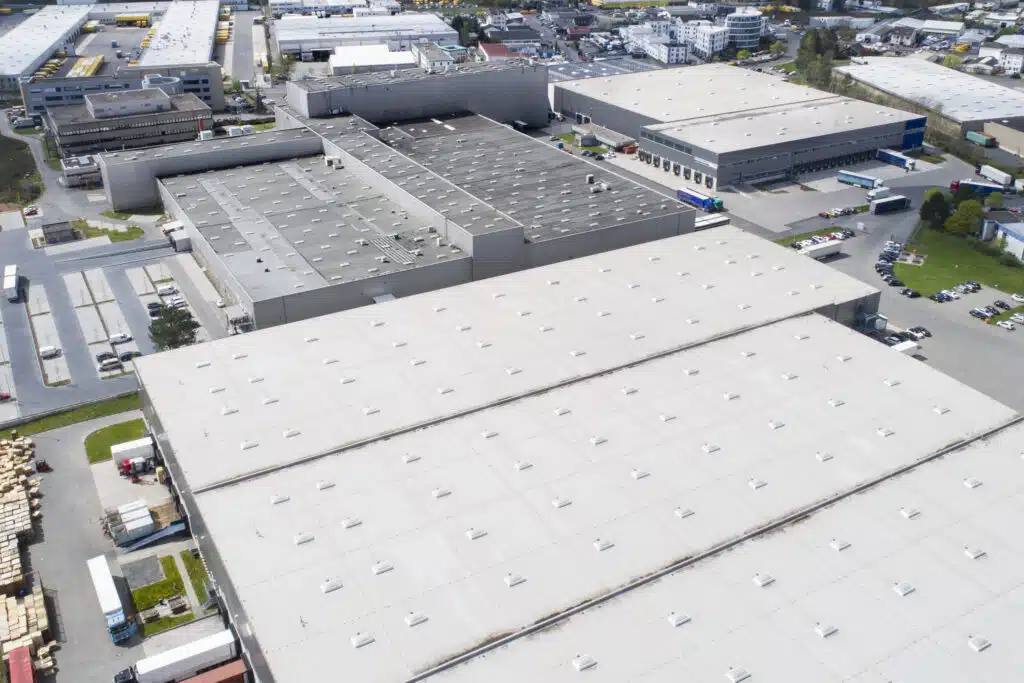
Unlike residential roofing, commercial roofing involves significantly larger projects with flat and low-slope designs, stricter building codes, and more complex warranties. Commercial contractors use cranes, larger crews, and specialized equipment to handle projects that residential roofers simply cannot manage. The commercial roofing industry operates at a different scale entirely, with the U.S. roofing contractors market projected to reach $92.5 billion by 2026.
Typical commercial roof sizes range from 5,000 square feet for retail plazas to over 500,000 square feet for distribution centers. This scale affects everything from planning and logistics to materials procurement and crew coordination. A job that might take a residential team a day could require weeks of work with multiple crews on a commercial building.
Commercial roof contractors serve diverse clients including property managers, facility directors, general contractors, REITs, and public entities like schools and government buildings. Each client type brings different priorities, from minimizing tenant disruption to meeting strict federal compliance requirements.
These contractors must coordinate with other trades, keep buildings operational during work, and adhere to OSHA regulations and local building codes. Safety requirements are particularly demanding, as roofing carries one of the highest injury rates in construction at 15.9 incidents per 100 workers according to BLS data.

Core Services Offered by Commercial Roof Contractors
A qualified commercial roofing contractor should handle the full life cycle of a commercial roof: installation, repair, restoration, and replacement. Understanding these services helps you determine what your property actually needs and whether a contractor can deliver it.
Installation and Replacement
When an existing roof reaches the end of its service life or sustains severe damage, contractors perform complete system installation. This process involves:
- Removing old roofing systems (tear-off) and disposing of materials properly
- Installing new membranes or metal panels according to manufacturer specifications
- Adding insulation layers to meet current energy codes
- Ensuring code-compliant drainage to prevent ponding water
- Coordinating with other trades for penetrations, HVAC equipment, and accessories
A new roof installation on a commercial building typically requires detailed planning to protect inventory, equipment, and operations below.
Roof Inspections
Routine annual and semiannual inspections form the foundation of roof maintenance programs. Professional inspections include:
- Visual assessment of membranes, seams, flashings, and penetrations
- Moisture scans using infrared technology to detect trapped water
- Core cuts to evaluate insulation condition
- Photo-documented condition reports for warranty compliance
- Assessment of the current roofing system against manufacturer standards
Leak Detection and Repair
Tracing leaks on flat roofs presents unique challenges since water can travel significant distances before appearing inside. Contractors use infrared or electronic leak detection equipment to pinpoint problem areas without destructive testing. Targeted repairs can extend roof service life by years at a fraction of replacement cost.
Preventive Maintenance Plans
Ongoing maintenance prevents 70-80% of premature roof failures according to industry data, and regular TPO roof maintenance is especially critical for flat commercial systems. Standard maintenance services include:
- Clearing drains and scuppers of debris
- Resealing flashings and edge details
- Repairing seams before they fail
- Documenting all work to support warranty claims
- Applying protective coat applications to vulnerable areas
Emergency Services
Quality contractors offer 24/7 response for storm damage, providing temporary dry-ins and coordinating with insurers after hail, hurricanes, or fire events. This rapid response capability can prevent minor damage from becoming catastrophic loss.
Common Commercial Roofing Systems and Materials
Commercial roof contractors must be fluent in multiple roofing systems to match each building’s structure, climate conditions, and budget requirements. Here’s what you should know about the primary options.
Single-Ply Membranes (TPO, PVC, EPDM)
Single-ply membranes command a 28% average revenue share for commercial contractors and represent the most prevalent product category, with Firestone UltraPly TPO roofing systems among the notable options. These systems include popular options like TPO roofing services for commercial buildings:
System | Composition | Best Applications | Typical Lifespan |
|---|---|---|---|
TPO | Thermoplastic polyolefin | Big-box retail, warehouses | 20-35 years |
PVC | Polyvinyl chloride with plasticizers | Industrial facilities, chemical exposure areas | 25-30 years |
EPDM | Synthetic rubber | High-traffic roofs, extreme climates | Up to 50 years |
TPO leads the market at 37% of respondents’ primary systems, followed by PVC at 28% and EPDM at 24%. TPO offers heat-reflective white surfaces that can reduce cooling costs by 20-30%, delivering excellent energy efficiency. Typical thicknesses range from 45-80 mil depending on application requirements. |
Built-Up Roofing (BUR) and Modified Bitumen
These layered asphalt and felt systems have a long history on schools and older commercial structures. BUR consists of alternating layers of bitumen and reinforcing fabrics, topped with gravel or cap sheets. Modified bitumen represents a modern evolution using polymer-modified asphalt for improved flexibility and durability.
Both systems offer:
- Proven performance over decades of use
- Excellent resistance to foot traffic
- Fire resistant construction with proper surfacing
- 15-20 year service life with proper maintenance
Metal Roofing Systems
Metal roofing accounts for about 15% of contractor revenue and offers distinct advantages for industrial and office buildings:
- Standing seam panels with concealed fasteners
- 40-50 year life expectancy with minimal maintenance
- Superior fire resistance and recyclability
- Excellent wind uplift resistance up to 150 mph
- Durable construction that withstands harsh environments
Metal systems require specialized installation skills but deliver long-term value through longevity and low maintenance requirements.

Spray Polyurethane Foam (SPF)
SPF creates a seamless, monolithic layer ideal for irregular roofs and buildings prioritizing energy savings. The foam expands to fill irregularities, providing R-values up to 6.5 per inch. An elastomeric topcoat protects the foam from UV degradation and provides the waterproofing surface.
Liquid-Applied Coatings
Silicone, acrylic, and polyurethane coatings allow contractors to restore aging roofs without full tear-off. These commercial roofing solutions can:
- Add 10-20+ years of service life to an existing commercial roof
- Reduce landfill waste from tear-offs
- Lower project costs compared to replacement
- Improve reflectivity and energy performance
Coatings now represent 59% involvement among surveyed contractors, reflecting growing adoption for restoration applications.
Certifications, Licensing, and Warranties
Commercial roof contractors often hold manufacturer certifications that directly affect warranty length and coverage. Understanding these credentials helps you evaluate contractor quality and protect your investment.
Licensing and Insurance
Every commercial roofing contractor should maintain:
- State or municipal contractor licenses appropriate to project scope
- General liability insurance (typically $1 million minimum)
- Workers’ compensation coverage for all employees
- Umbrella policies for larger projects
Always verify documentation before signing contracts. A licensed contractor demonstrates commitment to professional standards and provides legal recourse if problems arise.
Manufacturer Certifications
Becoming a certified contractor for major membrane or coating manufacturers requires significant investment in training, inspections, and performance tracking. Certified contractors typically offer:
- Extended warranty options not available from non-certified installers
- Access to manufacturer technical support
- Regular training on updated installation methods
- Quality assurance inspections on completed projects
Types of Warranties
Commercial roofing warranties vary significantly in coverage and duration:
Warranty Type | Coverage | Typical Duration |
|---|---|---|
Material-only | Defects in manufacturing | 10-20 years |
System warranty | Materials and workmanship | 15-25 years |
No Dollar Limit (NDL) | Full repair/replacement costs | 20-35 years |
NDL warranties provide the strongest protection but require certified installation and often mandate specific maintenance programs. |
Owner Responsibilities
Warranties come with owner obligations that, if ignored, can void coverage:
- Maintaining documented inspection records
- Completing required maintenance within specified timeframes
- Reporting leaks promptly to the contractor
- Avoiding unauthorized modifications or penetrations
- Keeping drainage systems clear and functional
How to Choose the Right Commercial Roof Contractor
A roof failure can devastate inventory, disrupt operations, and displace tenants. The success of your roofing project depends heavily on selecting the right contractor from the beginning.
Experience With Your Roof Type
Ask contractors about completed projects similar to yours in size and system. If you need 100,000 square feet of TPO installed or a multi-building metal campus, find contractors with documented experience at that scale, such as those specializing in commercial TPO roofing for large facilities. Request details about:
- Project sizes and roofing systems installed
- Building types similar to yours
- Challenges encountered and solutions implemented
- References from comparable projects
References and Portfolio
Quality contractors provide references willingly. Explore their track record by:
- Contacting property managers from recent jobs
- Requesting case studies with before/after documentation
- Visiting local completed projects when possible
- Checking online reviews and industry reputation
Safety Record
Roofing carries significant risk, making safety record evaluation essential. Review the contractor’s:
- Experience Modification Rate (EMR), with 1.0 being average
- OSHA violation history
- Written safety programs and training documentation
- On-site supervision practices
A strong safety record protects your property from liability and indicates professional management.
Detailed Written Proposals
A professional contractor provides comprehensive written proposals including:
- Complete scope of work with materials specified
- Installation methods and quality standards
- Project schedule with milestones
- Safety plan for on-site operations
- Warranty terms and duration
- Payment schedule tied to completion milestones
Communication and Project Management
Your contractor should provide a single point of contact, regular progress updates, and coordination that limits business disruption. Ask about their project management approach and how they handle unexpected issues or changes.

Working With a Commercial Roof Contractor: What to Expect
Understanding the typical project timeline from first contact through final inspection helps you plan effectively and set realistic expectations.
Initial Consultation and Roof Assessment
The project begins with a site visit where the contractor evaluates your existing roof condition. This assessment typically includes:
- Measuring roof area and documenting current conditions
- Conducting moisture surveys to detect hidden damage
- Discussing budget constraints and timeline requirements
- Identifying operational considerations for occupied buildings
- Photographing problem areas and overall conditions
Scope Development and Budgeting
Based on the assessment, contractors prepare options that might include repair, restoration, or full replacement. They help compare lifecycle costs so you can make informed decisions about whether to restore an existing roof or install a completely new system. Quality contractors explain trade-offs clearly without pushing unnecessary work.
Permitting and Scheduling
Your contractor handles building permits, coordinates inspections, and plans logistics including:
- Staging areas for materials and equipment
- Material delivery schedules
- Work hours that minimize disruption
- Coordination with building operations
On-Site Operations
During installation, expect to see:
- Fall protection systems and safety barricades
- Debris control measures
- Noise mitigation during sensitive hours
- Maintained access for tenants and employees
- Daily cleanup of work areas
A professional team keeps your building as operational as possible throughout the project.
Final Inspection and Documentation
Project completion includes:
- Detailed punch list review and corrections
- Warranty registration with manufacturer
- As-built documentation showing actual installation
- Turnover of maintenance recommendations
- Final inspection sign-off
FAQs About Hiring a Commercial Roof Contractor
How often should a commercial roof be inspected by a contractor?
Most manufacturers and contractors recommend professional inspections at least twice a year, typically in spring and fall, plus after major weather events like hailstorms or hurricanes. Regular inspections help catch minor issues before they cause leaks, preserve warranty coverage, and extend overall roof life. These inspections should include documented reports that create a maintenance history for your property.
How long does a typical commercial roof installation take?
Timelines vary significantly by size, system type, and weather conditions. A 20,000 square foot tear-off and replacement typically takes 1-2 weeks, while very large facilities can require several weeks or more. Weather delays, material availability, and building operational requirements all affect scheduling. Quality contractors provide detailed project schedules and phase work to keep buildings as operational as possible.
Can operations continue while a commercial roofing project is underway?
Yes, most commercial roof contractors routinely work over occupied buildings. Experienced crews phase work strategically, schedule noisy tasks during off-hours, and coordinate access to limit disruption. Discuss your operational needs in advance so the contractor can plan staging, safety zones, and communication with tenants or staff accordingly.
What signs indicate I should call a commercial roof contractor immediately?
Contact a contractor promptly if you notice:
- Interior water stains or active leaks
- Bubbling or blistering on the membrane surface
- Ponding water lasting more than 48 hours after rain
- Visible damage after storms including tears, punctures, or displaced materials
- Unusual odors suggesting moisture infiltration
Quick assessment prevents structural damage, mold growth, and equipment loss.
Is roof restoration with coatings a good alternative to full replacement?
For many aging but structurally sound roofs, a qualified contractor can apply silicone, acrylic, or other coatings to restore waterproofing at 40-60% of full replacement cost. However, restoration isn’t appropriate for all situations. A contractor should first perform a detailed inspection and moisture survey to confirm whether the existing system is a good candidate. If significant areas have trapped moisture or the membrane has failed, replacement remains the better investment.
Selecting the right commercial roof contractor requires careful evaluation of experience, certifications, safety practices, and communication capabilities. The time invested in this process pays dividends through quality installation, fewer problems, and protected warranty coverage. Visit potential contractors’ websites to explore their resources, review completed projects, and contact their team to begin your assessment. Your commercial building deserves a roofing solution backed by expertise and a contractor committed to excellence throughout the project and beyond.